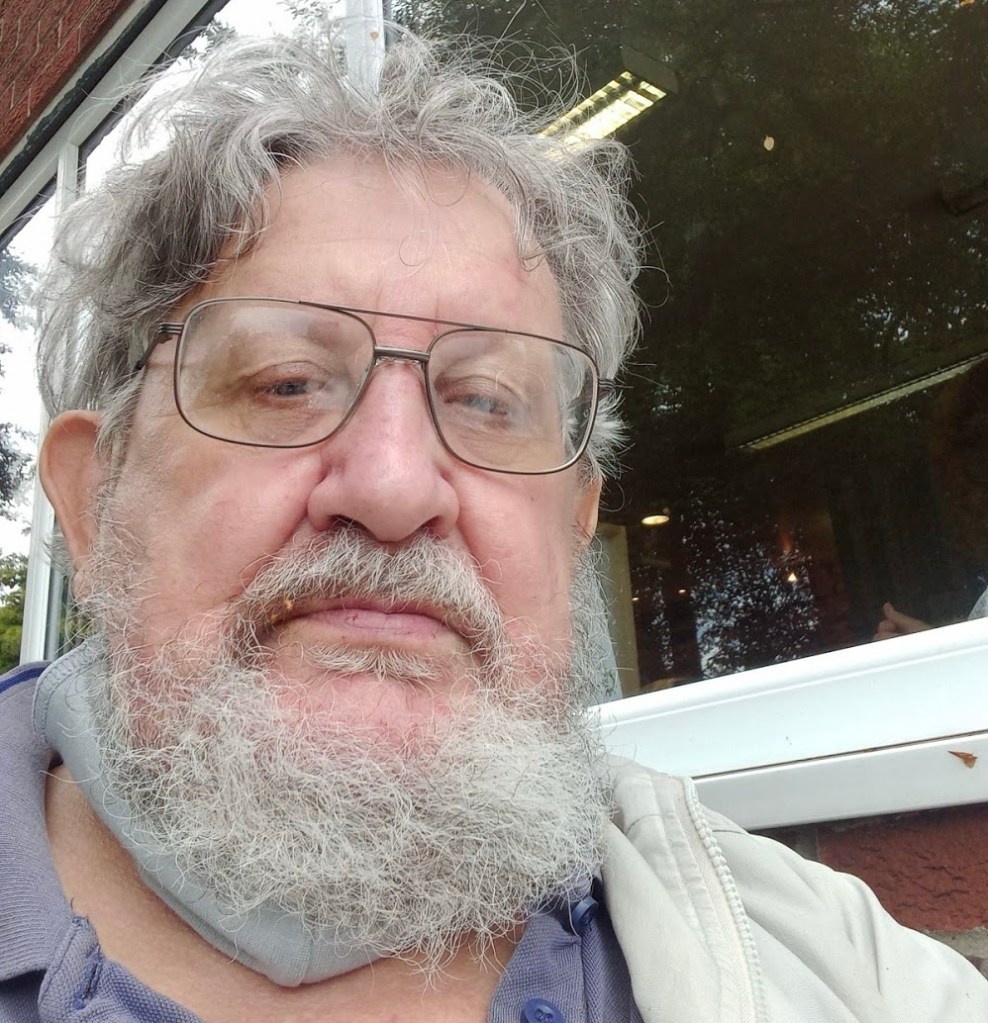
I graduated from the University of Newcastle NSW majoring in Politics, with an emphasis on Political Philosophy, although I excelled at Symbolic Logic. It’s an abstract subject, like mathematics, which requires substantive values to be applied to the symbols. Logic isn’t concerned with truth but validity. I could, for the sake of the argument, accept a statement with which I disagree and prove that it leads to a contradictory conclusion – it’s called a reductio ad absurdum (reduction to absurdity) but many politicians appear to be capable of holding two contradictory opinions simultaneously.
There was a difference of opinion in the philosophy department about the importance of linguistic analysis, some academic staff considered it a waste of time but my mentor and I took the opposite view – if people don’t have the same definition of a word how do we know they’re talking about the same thing? This is the very foundation of philosophy. It’s not a question of which definition is correct, it just has to be one that both participants agree on – a neo-liberal critic of socialism doesn’t understand what it is because they don’t listen to socialists! I’ve said it before: those who most need to read this blog are the least likely to do so, if they did we might have something to debate about but mutual abuse is no foundation for a reasoned debate!
Karl Marx said: “Philosophers have hitherto tried to interpret the world, the point is to change it.” I didn’t continue with a masters degree because I didn’t see how I could change the world when I was struggling to hold down a job. An academic career was out of reach for someone who graduates at the age of 40 and I wasn’t cut out to be a be a politician even in the unlikely event I were to be elected.
I illustrated the importance of language in an essay I wrote for a course in Industrial Relations in the Economics Department, the question of which was “Do trade unions have too much power?” I got a high mark because I identified two misunderstandings:
It wasn’t clear whether “the unions” referred to the Australian Congress of Trade (ACTU) or individual unions.
“Too much power” is ambiguous, it could mean that unions win most of their cases before the Conciliation and Arbitration Commission. Unions would argue that they have little power outside the system. *
I agree with Plato when he says:
Wise men speak because they have something to say, fools because they have to say something.
I’ve used this quote when opposing filibustering of private members bills in parliament but I often feel the need to say something even if I don’t know what to say. Plato quotes his own mentor as saying “I know I’m a fool, which makes me wiser than you”. This isn’t an accurate translation but we only have Plato as our primary source for what Socrates said.
Socrates was the first philosopher – literally “lover of wisdom” – and opposed those who professed to possess wisdom, namely the Sophists who taught rhetoric, which is all that barristers, politicians and journalists appear to be taught today. Socrates required them to explain what they understood by words they use in moral and political discourse.
Is something moral because the gods approve of it, or do the gods approve of it because it’s moral?
His constant questioning of accepted norms in the world’s first democracy resulted in his being convicted of “corrupting the youth” and sentenced to death by drinking hemlock. Plato and other discipled begged him to escape but he refused to be exiled from his beloved Athens. If the law demanded his life, his lifelong obedience to the law required his death and he was obliged him to accept it.
If you’ve read this far you’ll probably see where I’m going with this. If the law is wrong we are morally obliged to oppose it and to accept the consequences for doing so. We don’t expect to be executed, as Socrates was for teaching people how to think not what to think, only the most extreme right- wing politicians would like to re-introduce the death penalty for opinions they disagree with. Nevertheless, the law in the UK allows for the home of a pro-Palestinian activist to be raided in the morning and taken to a police station in her dressing gown and suffer what can only be described as torture!
I ask you: Is this what we call democracy? Sarah Wilkinson and others have been arrested under “anti-terrorism” legislation and been subjected to treatment which would undoubtedly come under any objective definition of “terrorism”. As I’ve said many times before, our language is being mangled beyond recognition and words are interpreted as meaning the precise opposite of what we usually mean. Which brings me back to where I started: we can’t have a sensible conversation if we’re not speaking the same language!
Just to be clear: I don’t mean I can’t have a conversation with someone speaking German, it would be difficult as I haven’t spoken it for half a century. I mean someone who thinks they’re speaking the same language as me but can’t understand what I’m saying, generally because they’re not paying attention.
A research fellow who was one of those who thought language wasn’t important contradicted himself when he criticised a paper I had written because I referred to a generic philosopher as “he” as if there were no female philosophers. It was a fair comment, if I was referring to a specific person I would use the appropriate gender, but I wasn’t. I could’ve said s/he but didn’t. The point is that anything we say can be misinterpreted even by people speaking the same language.
There are three universal languages: mathematics, logic and music. I know something of all three as well as a couple of programming languages.
*I’m just using this as an example of the importance of language. What I learned about Industrial Relations in Australia in the 1980s has no revelance today.
 thephilosophicalmuse